

Big Sur Trip
Big Sur, California, has got to be one of the most beautiful places in California. Maybe even the whole US. Tourists from around the world flock to this gorgeous gem to see its clear turquoise waters, with majestic rugged coastline, surrounded by tall luscious trees. I first fell in love with this place during my sophomore year of high school (2007) on a school trip. I didn’t even know that such tropical looking waters existed in temperate oceans.
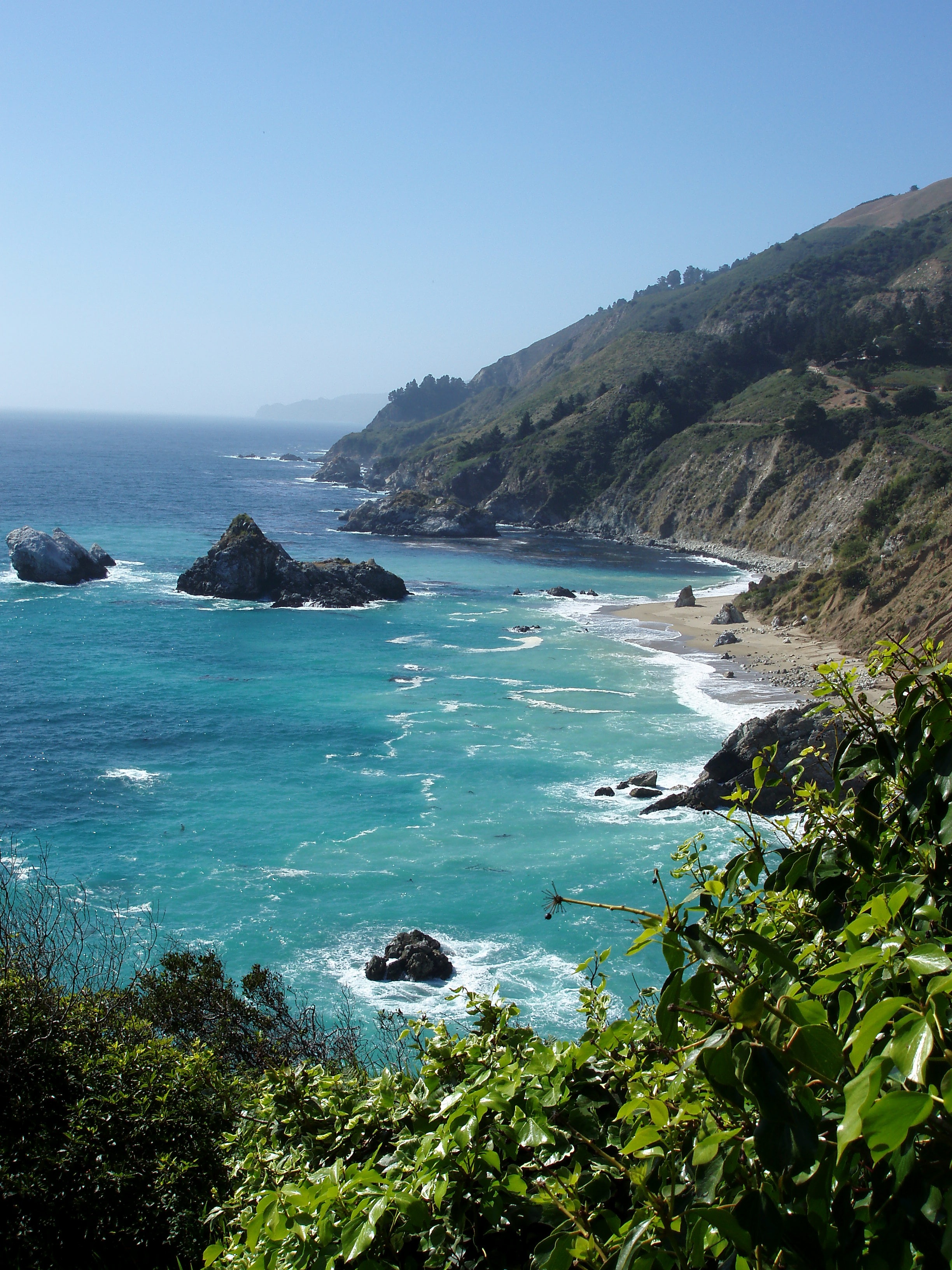
Photo: Haruka Ito, 2007. No color adjustments, no filter. It’s the real thing taken by a little point and shoot I had at the time. Isn’t it beautiful?
When I saw the trip listed on the OSDT 2014 calendar, I couldn’t be more excited. I wanted to be the first one signed up! Who wouldn’t want to dive in that stunning place?
The first day of the trip, we toured another beautiful city in California, Santa Barbara. We visited the Santa Barbara Maritime Museum, where we got a special private tour by Gabriel’s professor from UC Santa Barbara. This museum houses the spectacular lens from the Point Conception lighthouse, hand crafted in the 1800s. A lens like that, built with numerous precise, handmade glass pieces, can no longer be made, even with modern technology. And the modern replacement cannot shine as bright as that one. The museum is filled with history, not only of the lighthouse, but also the history of how Santa Barbara is the birthplace of commercial diving. The exhibit also highlighted surfing, submarines, rowing, and shipwrecks, so pretty much anyone who loves the ocean will enjoy this museum.
After eating at a harbor side restaurant, which used to be Gabriel’s favorite places to treat himself after long study sessions, we headed to Morro Bay where the boat was docked. The boat is nicer than all the usual local boats we charter! It is the biggest boat, and the galley is so wide that no one has to worry about bumping into each other while walking through. We had a small group, so people had a whole table to themselves! There were very nice large shower rooms, not the usual cramped shower with a toilet taking up most of the space. The single bunks were the size of the usual double bunks. The back deck was so large that there was room to leave gear bags right there! They had dryers, freezers, and refrigerators for the guests to use. The food was amazing and probably the freshest meals I’ve ever had on a California dive boat. So should this be considered a local trip or an overseas trip? Well, I think the feel of it is very much like our local trips, but aboard a nice, huge boat with great food and awesome crew (kind of like a small-scale overseas liveaboard). I don’t think our California diving boats can get much better than aboard the Vision.
The dive sites were top notch. We went to pinnacles, underwater caves and canyons, and other hard-to-get-to spots. One of the highlights was swimming through Thomas’s Cave, which is a huge underwater cave with three entrances. After swimming out of the cave, I entered a spectacular little cove, where the light was shimmering through the water to the eelgrass and seaweed bed. My other favorite dive involved finding little pieces of real jade at Jade Cove, where I got a handful of jade that can be easily turned into nice jewelry pieces.
The Big Sur dives are definitely for advanced dive sites, with plenty of surge, swells, and currents (side current, down current, and currents going all directions). This means that life was abundant and the underwater scene was in full action. The reefs were teeming with life, including white plumose anemone, huge lingcod everywhere, nudibranchs I had never seen before, and purple hydrocorals. Since the water is colder, we saw many things that you can only see at deeper depths in the Channel Islands. There were vermillion and lingcod at fairly shallow depths, around 40 feet or less. This area is also unique, because there are two types of kelp in the kelp forest. From Southern California through the Channel Islands, you only see giant kelp. Giant kelp likes the warmer waters, so they’re not found in the colder Northern waters. From Alaska to Central California, you see lots of bull whip kelp that likes the cold waters. Big Sur is unique in that both types of kelp thrive in the same location. This variety of kelp creates a forest that can house a greater diversity of marine creatures. Things that can only live up north and others that can only live in the south meet and live together in unison. Another interesting marine life observation I made were the number of bat stars that scatter the sea floor in Big Sur. You might see some bat stars at Santa Cruz Island, but they are not the dominant sea star species in the Channel Islands. Also, if you are tired of seeing so many sea urchins on the local trips, Big Sur’s lack of sea urchins overtaking the landscape might soothe your eyes. (The sea otters keep the urchin population in check.) Since the Vision is the only dive boat that operates in the area, and only for two weeks out of the year, you can bet that not many people have a chance to dive in these hard-to-access pinnacles and dive sites.
Aside from diving, you can’t help but stare at the beautiful coastline. We passed by one the most photographed bridge one the West Coast (due to the beautiful design and location that makes it easy to photograph from land). This bridge, the Bixby Creek Bridge, is also the tallest single-span concrete bridges in the world. We also visited McWay Falls in Julia Pfeiffer Burns State Park. This waterfall is the tallest freshwater waterfall (84 feet) that cascades straight into the ocean on the Pacific coast. Hundreds of tourists visit the waterfall, but since there is no beach access allowed, they go on a paved walkway and view the waterfall from high above the falls and far away enough to take in the whole scenery with the turquoise cove. Unlike those tourists, the Vision went straight into the cove, and saw the waterfall up close. I’ve seen the waterfall from the far away viewpoint. To see the waterfall from sea level was one of the most memorable and special moments of the trip.
There’s just so much to do on this trip, from touring Santa Barbara, sightseeing, diving, and simply enjoying the cruise. They also have kayaks on board, if just looking at the coastline isn’t good enough. What an extraordinary trip! You’d better not miss the next opportunity to go dive at this special gem in California, aboard the most comfortable local dive boat, the Vision.
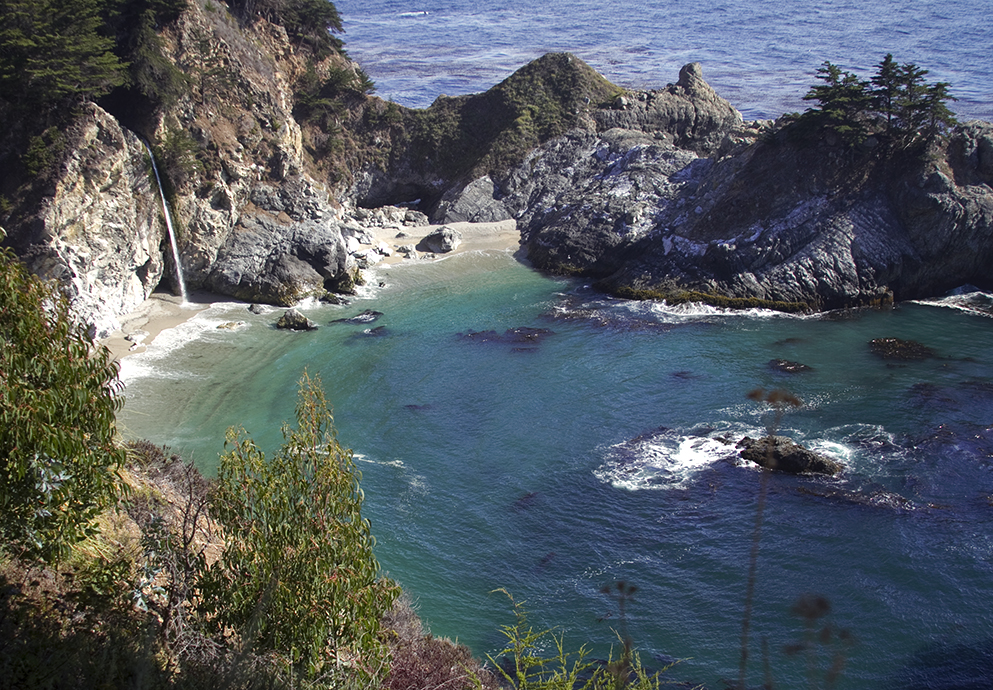
Photo: Haruka Ito, 2012. View of McWay falls that tourists see
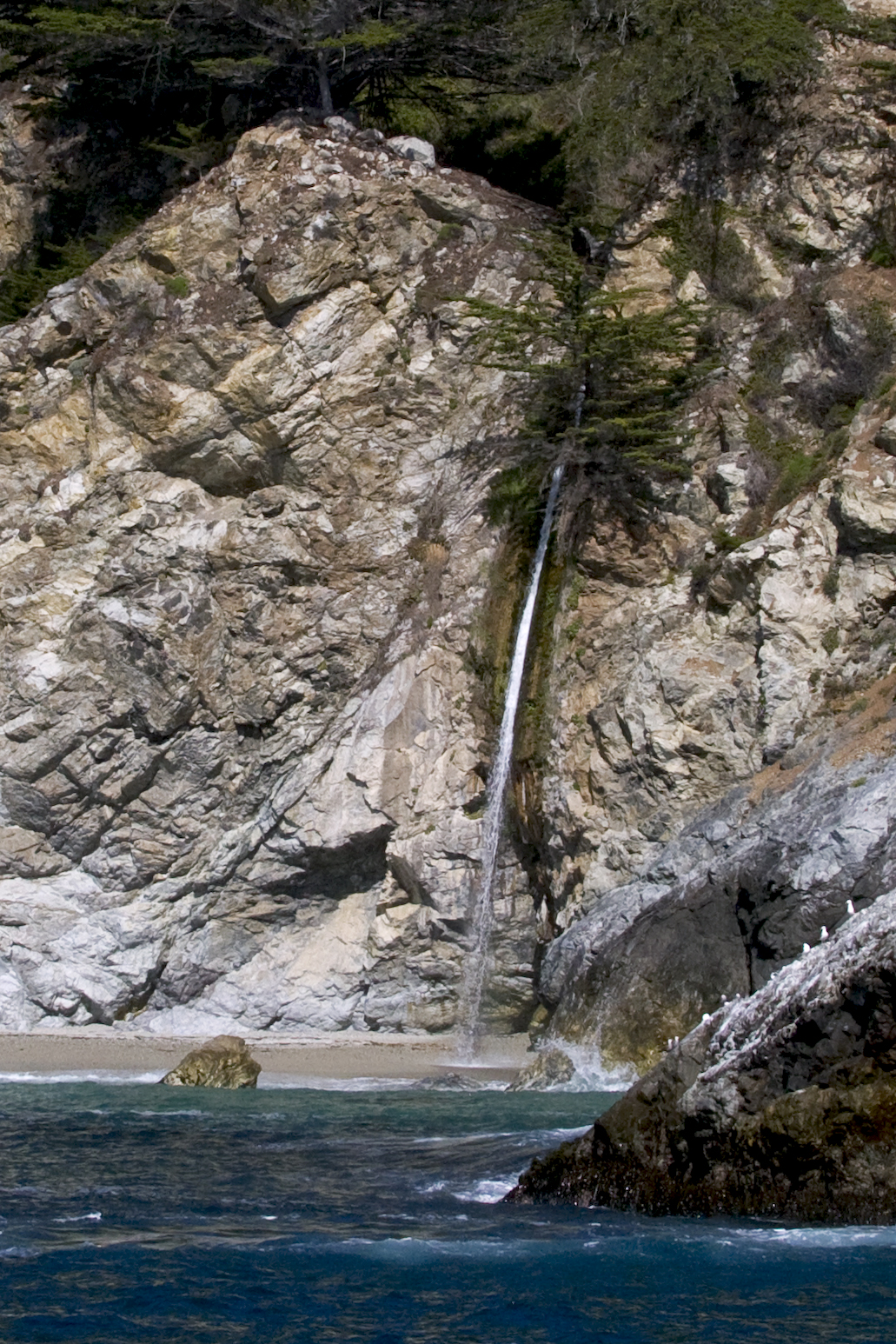
Photo: Haruka Ito, 2014. View of McWay falls aboard the Vision
Dive Blog May 4, 2014 Anacapa Island
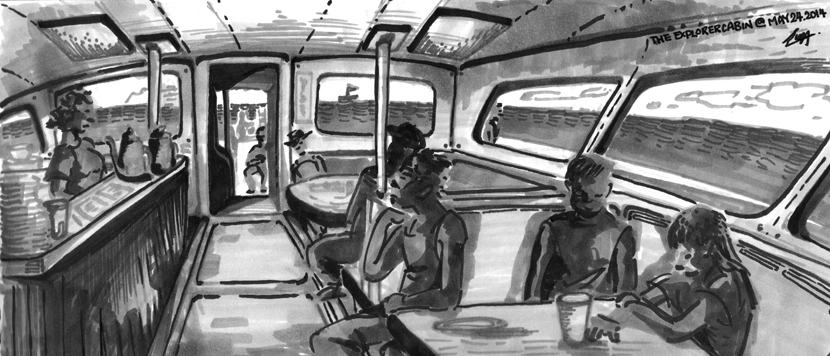
Explorer Cabin Sketch by Erica Yeung
Dive Blog May 4, 2014 Anacapa Island
Today’s dive trip to Anacapa Island on the Explorer included new personal records, challenging sites, rescue practice, and as usual, a wonderful experience with divers, crew, and dive-sites alike!
The first dive of the day holds my current deepest dive! 115 feet! At first, I was nervous about the depth, on top of the low visibility and current. But when I found myself comfortable at 85 feet, my anxiety subsided. I was excited to see the plane wreck; unfortunately, the anchor was placed too far to safely reach the wreck. Even though I was a little disappointed, I was still thrilled to have dove so deep without any complications. The excitement didn’t end there; I practiced important rescue skills after.
When we got to the next site, Fish Camp, Luis helped refine our rescue towing skills. It was a nice chance to do some surface swimming and practice my kicks. I noticed that my kicks were too small and frequent, so I ended up wasting energy that I could have used to tow my buddy back to the boat. After successfully saving our victims, we had time to practice our pike dives.
The group didn’t seem to have a problem going under. One person (Ian) was even able to get sand from 25 feet deep. I on the other hand, could barely break the surface. I felt like a Margikarp helplessly splashing around. Thankfully, Luis told me that I needed to bend my top half of my body straight down , lift my legs, then kick. I was able to go down, but still had trouble going deeper than 5 feet. Again, Luis helped my techniques. Since we had to return to the boat after, I didn’t get the chance to practice again. However, I was able to practice another skill during the next dive.
At the same site, we enjoyed the vibrant environment while looking for a shallow area to practice our E.S.A. (Emergency Swimming Ascent). This skill was rather easy to carry out; however, I was shocked to have forgotten how to put on my weight belt while in the water! A basic skill that I seldom used needed to be refreshed.
For our last dive, our group faced the most challenging conditions of the day: surge, current, and low visibility. Also, we briefly discussed how to pull unconscious people out of the water. I need to work on my control because I kept hitting/crashing into other divers or rock formations. I also need to build up my stamina because the current pushed us back and our group had to swim for a long time until we returned to the boat.
Overall, this trip showed me that even though I felt okay with my diving, I have lots of room for improvement. I had lots of fun talking, eating, diving, and sleeping. I am looking forward to more fun diving and skill refining in the near future! Happy diving!
Written by Kristiana Rendon
Illustration by Erica Yeung
Dive Blog - Farnsworth Bank and Backside Catalina Island-March 23rd, 2014
I had a great dive trip on the Cee Ray today! Captain Mike, the crew members, and the deckhand were all friendly people to talk with, which made the boat ride very pleasant and stress-free. The Cee Ray comfortably accommodated roughly 30 divers with delicious food and beautiful dive sites. These sites included Farnsworth Bank, Cave of Cortez, Iron Bound, and Black Rock. Diving at Farnsworth Bank was especially exciting since we haven’t been able to make it to that site in a few years. Out of all the four stunning dive sites, I found Farnsworth Bank to be the most exciting and diverse.
Right when I jumped in, I saw the vivid life of Farnsworth Bank with a visibility reaching up to 80 feet. Abundant colonies of purple hydro coral were visible at all angles and lingcods of different sizes were camouflaged on rocks with sea fans. Even sea lions and a sting ray were casually swimming around. Additionally, large schools of blacksmiths and señoritas surrounded divers. It was like I was in an underwater level of a video game! I felt so fortunate to have had this chance to go diving. Above is a short clip from Farnsworth Bank taken by the magnificent Andy Rios, and edited by the superb Thomas Templar! Enjoy!
Not too long after we boarded the Cee Ray, we saw a pod of whales less than half a mile away! I had never seen whales this close before, so this was a nice experience. Then, we ate a satisfying breakfast, had a great time socializing, and munched on sweet fruit while we waited to reach Backside Catalina Island.
At the Cave of Cortez, I swam with friendly garibaldis, shy lobsters, tall large kelp forests, and red foot moon snails clinging onto kelp leaves. Schools of fish swarmed in circles, and on the floor, were scattered horned sharks peacefully lounging about. At Iron Bound, there were huge sheepheads and calicos! Some divers saw a black sea bass; however, I didn’t. I hope to see one soon! At Black Rock, I flew through large kelp forests and saw eel grass, kelp fish, and red foot moon snails. It was a very nice last dive of the day.
Between dives, executive Chef Kim prepared delicious meals including salad, authentic Chinese Bihun (also known as rice vermicelli), and chicken wings. She even served ice cream and brownies after our last dive! I’m just thinking about those moist brownies. Yummm.
On the way back to the harbor, some divers chatted, while others slept (like me, haha). Dolphins even accompanied the Cee Ray for a while. Reflecting back on this trip, with old and new marine life to enjoy, refining skills, eating great food, and being surrounded by awesome people, I continue to understand why I love diving. So, I hope I was able to share a memorable dive trip with you and hope to see you underwater soon! Until next time! :)
Written by Kristiana Rendón
Video taken by Andy Rios
Video edited by Thomas Templar